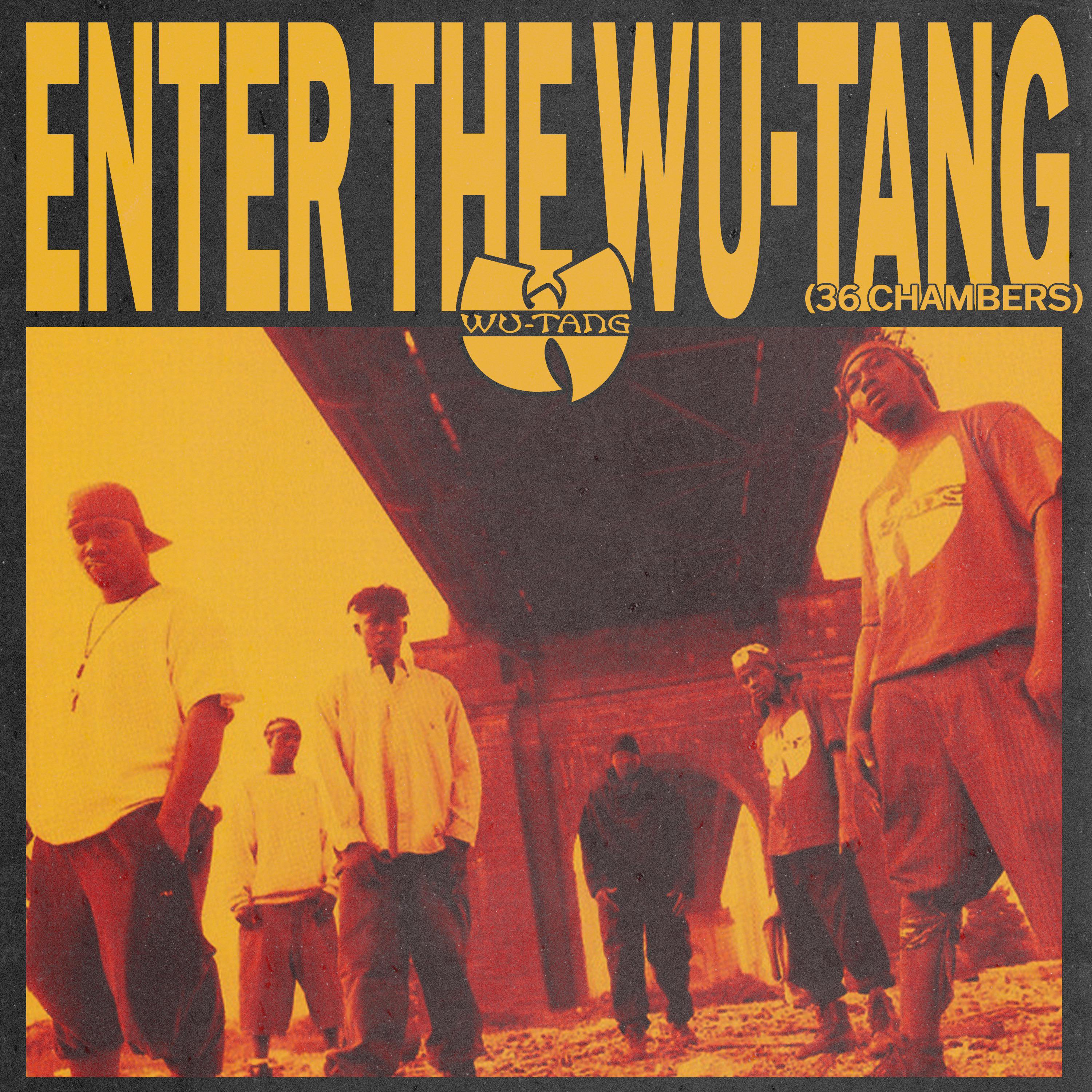
The Wu-Tang Clan signed a contract nobody in the music industry had thought to ask for. It gave nine people the right to remain a group while each member signed separately with competing labels. Every major label that signed a Wu member thought they were getting a prize. They were getting a piece of someone else's plan.
"I gave myself five years to take over rap. Five years was enough time to make Wu-Tang the biggest thing in hip-hop - and then enough time for each individual member to go out and do it alone. The plan was always the plan."
RZA
01
The origin story
"Cash rules everything around me, C.R.E.A.M., get the money"
C.R.E.A.M., track 8
In 1992, RZA stood in a courtroom in Cleveland, Ohio, charged with attempted murder. He was twenty-two years old. He had travelled to Ohio with a cousin; there had been a fight; a gun had been used. The prosecution's case fell apart. RZA was acquitted. He walked out of that courthouse and understood, in a way that very few moments in a life allow, that he had been given something that could be taken back at any time.
He made a decision. He would dedicate five years entirely to hip-hop. Not to a record deal, not to a career - to a plan. The plan: forge nine separate artists into a single unstoppable unit, use that unit to dominate rap, then release each member individually into a market that would already know and want them. A military strategy applied to an art form. Wu-Tang as beachhead. The solo careers as the inland campaign.
What made it credible - what separated it from the grandiose plans of every other broke twenty-two-year-old in New York - was where these nine people came from. Staten Island. The forgotten borough. The borough left off the New York subway map for years. The borough the industry had never once cared about, that the rest of New York treated as a postscript. That invisibility was the advantage. Nobody was watching. Nobody tried to sign them early. Nobody told them what kind of rap they were supposed to make.
RZA built a home studio in the Park Hill projects - an area the crew had already renamed Shaolin, after the martial tradition that would become the album's mythology. He gathered his cousin GZA, childhood friends Raekwon and Ghostface Killah, and five others: Method Man, Ol' Dirty Bastard, Inspectah Deck, U-God, and Masta Killa. For two years before the album existed, they recorded in basements and bedrooms, building a sound nobody had heard, waiting for the moment the world would catch up.
1992
The acquittal
RZA acquitted of attempted murder in Cleveland. Takes it as a second chance and commits entirely to the five-year plan. Returns to Staten Island. The clock starts.
1992-1993
Park Hill sessions
The group records in RZA's home studio in the Stapleton and Park Hill projects - already calling the area "Shaolin." Nine artists, no label, no budget, no deadline.
Early 1993
Protect Ya Neck pressed
Wu-Tang fund and press approximately 500 copies of a debut single independently. It goes to radio with no label behind it. DJ Ralph McDaniels adds it to Video Music Box. A buzz builds around a group that officially does not exist.
Mid 1993
The deal
Steve Rifkind of Loud Records signs Wu-Tang. The contract is unprecedented: one group album through Loud, each member free to sign solo deals with competing labels. The industry accepts the terms without fully understanding them.
Summer 1993
Firehouse sessions
RZA produces the album largely at Firehouse Studio in Staten Island. Total recording cost: approximately $36,000. A mid-level music video in 1993 cost more.
November 9, 1993
Released
Enter the Wu-Tang (36 Chambers) released on Loud/RCA. It enters a hip-hop landscape dominated by West Coast gangsta rap and sounds like nothing else in it.
02
The production as weapon
"Ghostface, catch the blast of a hype verse"
Da Mystery of Chessboxin', track 6
The sound of Enter the Wu-Tang was built on an Akai MPC60 and an E-mu SP-1200 - the same samplers that had been the backbone of hip-hop production since the late eighties. What RZA did with them was different in degree rather than kind, but the degree was everything. He sampled old soul and funk records in the standard way. The difference was what he wrapped around them.
The kung fu film dialogue. RZA had grown up watching Shaw Brothers martial arts films on local television. He sampled them compulsively - fragments of dialogue about honour and betrayal, the eerie synthesised scores that Shaw Brothers composers had written in the 1970s, the screech of a weapon thrown at range. These were not the kind of samples that cost money to clear. Nobody had thought to use them. They gave the album a texture and mythology that no other rap record had - a sense that the music was arriving from somewhere ancient and strange, a tradition that pre-dated hip-hop entirely.
The production was also deliberately lo-fi in a moment when other hip-hop records were becoming glossier. Dr. Dre's The Chronic had come out the year before: polished G-funk, immaculate low end. RZA went the opposite direction - muddy bass, distant drums, samples that sounded found rather than licensed. The dirtiness was a philosophy, not a limitation. It mirrored the environment the music came from. It made the album sound like the streets actually sounded, not like a cleaned-up version of them.
Primary sampler
Akai MPC60
RZA's main tool for chopping samples and sequencing beats. The MPC's timing, running slightly ahead of the grid, gave the drum patterns their forward-leaning urgency. Every track on this album hits before you expect it to.
Core instrument
Grit machine
E-mu SP-1200
The SP-1200 samples at a lower bit depth than modern equipment, introducing grain and crunch into every sound processed through it. The warmth on C.R.E.A.M. and Tearz is partly the sample source - and partly this machine at work.
Texture
Mythology engine
Shaw Brothers Dialogue
Films including Shaolin and Wu Tang (1983) and Five Deadly Venoms (1978) provided not just samples but an entire conceptual universe - the honour codes, the clan rivalries, the geography - that the group mapped directly onto Staten Island and New York City.
Lore layer
Emotional core
Soul and R&B Samples
Wendy Rene, The Charmels, Gladys Knight. RZA selected sources that already carried melancholy and weight, then pitched them down and slowed them until the original warmth became something colder. C.R.E.A.M.'s piano loop is from a 1967 soul record most listeners will never trace.
Sample strategy
03
Protect Ya Neck - the single nobody paid for
"Protect ya neck"
Protect Ya Neck, track 10
In early 1993, the Wu-Tang Clan had no label, no manager, and no budget. They had a song. They pressed approximately 500 copies of it at their own expense - a self-funded 12-inch, "Protect Ya Neck" backed with "After the Laughter" - and distributed it themselves. Some copies went to independent record stores in New York. Some were hand-delivered to radio stations. The group cold-called DJ Ralph McDaniels, host of Video Music Box on New York cable television, and persuaded him to add it to rotation.
The response from listeners was immediate. Radio stations received requests for a record nobody had a copy of. A buzz built around a group that, officially speaking, did not exist yet. Steve Rifkind, founder of Loud Records, was one of the people who heard it. He came looking. When he found the Wu-Tang Clan, they were nine people on Staten Island with a completed album, a mythology already in place, and no interest in a standard deal.
The contract they negotiated was unlike anything Loud or RCA had agreed to before. The group would record one album together on Loud. Each individual member retained the right to sign solo deals with any other label - including labels competing directly with RCA. Loud agreed because they thought they were signing the next big rap group. They were signing the infrastructure for the next decade of hip-hop. Rifkind got a debut album. Wu-Tang got a platform, a brand, and the freedom to build an empire while appearing to serve someone else's interests.
"Protect Ya Neck" has eight rappers on it, all needing to be heard, and it is structured so that each one gets a moment while the track never stops moving. It was designed as an introduction - here are nine people, each worth your attention, none of them going anywhere. It worked before it was released. That has not happened in quite the same way again.
04
The lore layer
"Wu-Tang is for the children"
Ol' Dirty Bastard, 1998 Grammy Awards
The W - a sword, not a letter. Circulating before the album existed.
The title
36 Chambers - three theories, none contradicted
The title has three credible explanations, and the Wu-Tang Clan have never committed to just one. The first: in Shaolin kung fu tradition there are 36 chambers - progressive levels of martial training at the Shaolin Temple, the basis for the 1978 Shaw Brothers film The 36th Chamber of Shaolin. The album positions itself as the first level of an ongoing education. You are entering the training, not completing it. The second: nine members, four chambers of the heart - 9 x 4 = 36. The group as a single organism, all chambers beating together. The third: the album was recorded for approximately $36,000. RZA has acknowledged the symmetry without confirming whether the number was chosen to match the budget or the budget happened to match the mythology. This is characteristic of how Wu-Tang built their world - everything means more than one thing, and none of the layers cancel each other out.
Geography as mythology
Shaolin, Medina, Killah Hill
On every track, the Wu-Tang Clan refer to their home borough not as Staten Island but as Shaolin - the name of the temple in kung fu mythology that represents the highest level of discipline and knowledge. The mapping goes further. Brooklyn is Medina. The Bronx is Asiatic Medina. Manhattan is just "the island." The five boroughs become five armies in a martial mythology that nobody outside the crew had named before. Killah Hill - used by Ghostface Killah to refer to his specific neighbourhood - comes from Killah Hill Towers, a housing project in Park Hill. The geography was never glamorised. It was renamed so that the people in it could see themselves as warriors rather than casualties. The mythology was practical, not decorative.
The theology
Five Percent Nation - the hidden language
Most of the Wu-Tang Clan were members of, or deeply influenced by, the Five Percent Nation of Gods and Earths - a movement founded in Harlem in 1964, derived from the Nation of Islam, teaching that the original people of the earth hold knowledge that the majority of the world has been denied. The Five Percenters developed Supreme Mathematics: a system in which each numeral corresponds to a concept - 1 is Knowledge, 2 is Wisdom, 3 is Understanding, and so on through nine. The language of the album runs on two tracks simultaneously: rap record and coded transmission. References throughout the album to "the god," to "peace god," to "dropping science," to "building" - these are all Five Percenter terminology. Most listeners in 1993 did not have access to this layer. It was not designed to exclude them. It was designed so that people who did have access would hear the album differently from everyone else. The album rewards knowing more than one language.
The logo
The W - a sword, not a letter
The Wu-Tang sword logo - a stylised W that reads simultaneously as a blade - was in circulation among the group before the album had a label deal. It appeared on clothing, was painted in the neighbourhood, and was worn as a mark of membership before there was a product to sell. The brand preceded the album by months. By the time Enter the Wu-Tang was released, the logo already meant something to people who had heard "Protect Ya Neck" on the radio and nothing else. In 1993, a group building visual identity before commercial release was a strategy the industry would not fully understand for another decade.
05
The songs - what most people miss
"Rapping is not just a form of music - it's a martial art"
RZA
Five songs. Not the surface readings. The things underneath.
01
C.R.E.A.M.
Track 8 - the most-heard, least-understood
The most-played Wu-Tang track by some distance, which means most people have never quite heard it. The piano loop - sampled from "As Long as I've Got You" by The Charmels (1967) - is so melancholy that the title reads as irony the moment you listen properly. Cash Rules Everything Around Me is not a celebration of money. It is a diagnosis of a trap. Raekwon and Inspectah Deck are not bragging about wealth; they are cataloguing the specific violence of growing up without it - the dead friends, the drug corners, the impossibility of a straight path. The hook is the thesis, not the reward. By the end, the cash that rules everything is exactly what has destroyed everything. The piano keeps playing anyway.
02
Tearz
Track 11 - the one people skip
Built on a sample of Wendy Rene's "After Laughter (Comes Tears)" from 1964 - a gospel-inflected soul record of devastating beauty. RZA slows it, pitches it down, loops the grief until it becomes enormous. Over it, RZA and Ghostface deliver the album's most exposed verses: RZA about a friend who contracts HIV; Ghostface about his brother shot dead at the front door of their building. The album has been described as grimy, confrontational, aggressive. Tearz is where it becomes a documentary. It is placed second to last on the tracklist. Almost nobody discusses it in the same breath as C.R.E.A.M. They should.
03
Da Mystery of Chessboxin'
Track 6 - the one that explains the album
Named after the 1979 Shaw Brothers film Mystery of Chess Boxing - a film about a student who masters martial arts to avenge his father, which functions as a direct template for the album's entire project. The chess metaphor is not decoration: chess as intellectual combat, boxing as physical combat, the combination as the Wu-Tang ideal. Every rapper on this track approaches it as a test. U-God opens with six bars that arrive like someone kicking in a door. He recorded them hours before surrendering himself to serve a prison sentence on a gun charge. RZA held the album rather than replace him. The track is eight minutes of proof of concept - nine people competing to outdo each other, all of them succeeding simultaneously.
04
Can It All Be So Simple
Track 5 - the vulnerability nobody expects
The slowest, most exposed moment on the album. Raekwon and Ghostface look back at childhood with something close to tenderness: the time before the corners, the arrests, the losses. Sampled from Gladys Knight and the Pips' "The Way We Were / Try to Remember" - a song about nostalgia from 1974 - pitched down until it sounds like a memory heard through water. The title is the album's real question, not a rhetorical flourish. Could it have been different? Could it still be? The track ends without an answer. The nine-second Intermission that follows is RZA leaving space where the answer would normally go.
05
Method Man
Track 9 - the deliberate misread
Selected as the album's lead radio single - the track the label believed was the commercial entry point. Loud Records was not wrong: Method Man is the most immediately charismatic member of the group, and this is his showcase. But the selection reveals something about what the industry expected from Wu-Tang. They expected a character. They got a revolution. What made Method Man work as a single is what made all of them work: singular, unrepeatable, and completely uninterested in palatability. The song ends with a mock torture scene delivered as comedy. It was 1993's most unlikely hit. It went gold.
06
The aftermath - three acts
"Yo, I was born in the slums of Shaolin"
Various members, passim
Act one
The solo machine
RZA's five-year plan ran exactly as designed. Between 1994 and 1997, every member released a solo debut on a different major label, each produced largely by RZA. The sequence became the most sustained run of debut albums in hip-hop history. Method Man signed to Def Jam and released Tical in 1994. Raekwon's Only Built 4 Cuban Linx arrived on Loud in 1995 - widely considered one of the ten best rap albums ever made. GZA's Liquid Swords followed on Geffen the same year. ODB, Ghostface Killah, Inspectah Deck, U-God, and Masta Killa followed in sequence.
Every label that signed a Wu member believed they had an exclusive relationship. What they had was a distribution node in someone else's architecture. RZA produced across all of them, maintaining creative continuity while appearing to serve competing corporate interests. By 1997, the Wu-Tang brand was everywhere simultaneously - a monopoly operating in plain sight as a roster.
Act two
Ol' Dirty Bastard - the element no plan could contain
Russell Tyrone Jones - Ol' Dirty Bastard, Big Baby Jesus, Dirt McGirt - was the member of the Wu-Tang Clan that no strategy could account for. His 1995 debut sold over a million copies while its creator was variously a fugitive from police, collecting a platinum plaque for his label, and appearing on welfare during the same period. His appearance at the 1998 Grammy Awards - arriving mid-presentation to address the audience on the subject of Wu-Tang being for the children - is one of the most documented moments in the ceremony's history.
He died in 2004, aged 35, of a drug overdose, two days before his thirty-sixth birthday. He was found at Loud Records' recording studio in New York, where he had been working on his third album. The Wu-Tang logo appeared at his memorial. He had never left.
Act three
The enterprise
By 1997, year five of the plan, RZA formally handed creative control back to each individual member. His role as sole decision-maker for the Wu-Tang enterprise ended with Wu-Tang Forever - a double album that debuted at number one in the United States and six other countries and sold 600,000 copies in its first week. The five-year plan had been executed with near-total fidelity.
What came next was less controlled and more interesting. Wu-Wear, the clothing line launched in 1995, expanded to standalone retail stores - among the first hip-hop brands to achieve this. A Wu-Tang video game. A comic book. A feature film. In 2015, the group released Once Upon a Time in Shaolin - a single-copy album sold at auction for $2 million as a deliberate statement about the music industry's devaluation of recorded music. It was the most Wu-Tang thing that had ever happened. RZA conceived it as a thought experiment and executed it as a business deal. This was always how it had worked.
07
What it's really about
"Bringin' the ruckus"
Bring da Ruckus, track 1
Enter the Wu-Tang operates on three thematic levels simultaneously. Most listeners catch one. Here are all three.
Layer one
The economics of scarcity
The surface reading, and the one that has aged most visibly. Nine people from the most economically marginalised borough in New York City making an album about what happens when money rules everything and you have none of it. C.R.E.A.M. is the explicit statement, but every track is inflected by the specific texture of poverty - not poverty as an abstraction, but as a series of concrete decisions with concrete consequences. The kung fu mythology is not escapism. It is the same information delivered in a form that does not require you to call yourself a victim. You are not a product of a broken system. You are a student in a difficult school. The distinction matters more than it should have to.
Layer two
Nine individuals as one argument
Below the surface: the album is a structural argument about collective strength. Every track exists to prove that none of these nine people sounds like any of the others, and that together they are stronger than the sum of their parts. GZA is a chess strategist. ODB is chaos. Method Man is a showman. Ghostface is an impressionist. Raekwon is a documentarian. Inspectah Deck is a craftsman. The clan format insisted that all of these things could coexist without any of them being diminished by the others. In a genre that had spent the early nineties finding and promoting singular figures, Wu-Tang proposed that nine separate centres of gravity, orbiting each other, could produce more force than any one of them alone. The solo albums proved it. The argument took five years to make and was correct.
Layer three
Knowledge as self-defence
The deepest layer, and the one that connects the Five Percenter theology to the kung fu mythology to the economic argument. The 36 chambers of Shaolin are not just training levels - they are a framework for how knowledge is acquired and deployed. You learn a thing. You master it. You protect it. You pass it to the people around you who can use it. RZA positioned hip-hop as the modern form of this transmission. Him producing every solo album in the first phase was not a control mechanism - it was the passing of knowledge from the top of the temple to the next chamber. When he released control in 1997, each member had completed enough chambers to stand alone. The album title was a promise. The five years were the delivery. The knowledge, once held inside 36 Chambers, was out in the world and running under its own power.
08
The tracklist
Twelve tracks. Sixty-one minutes. Nine people. Hear it as one continuous argument.
Gold = featured song (section 05)Crimson = lore track
#
Title
What you might not know
1
Bring da Ruckus
Opens with a sample from Shaolin and Wu Tang (1983). RZA wanted the first seconds to disorient - you hear a kung fu film before you hear a rap record. The intention: make you ask where you've arrived before you can ask who's speaking.
2
Shame on a Nigga
Ol' Dirty Bastard's opening verse is the first moment most listeners understand that this group contains something genuinely unclassifiable. ODB raps with a cadence that has no antecedent - not singing, not speaking, not flowing in any recognisable sense. Fully formed from bar one.
3
Clan in da Front
GZA's primary solo track on the album. RZA called him "the Genius" - the most technically precise rapper in the group. This track is the demonstration. Every line builds on the previous one with the specificity of someone who has thought five moves ahead.
4
Wu-Tang: 7th Chamber
Nine rappers, no hook, no repeated chorus - just verse after verse for over six minutes. The structural choice, giving everyone space with no commercial concession, is the artistic policy of the album made explicit in a single track.
5
Can It All Be So Simple / Intermission
Sampled from Gladys Knight and the Pips' "The Way We Were / Try to Remember" (1974). The nine-second Intermission that closes the track is RZA leaving space where an answer would normally go. The silence is not empty.
6
Da Mystery of Chessboxin'
Title from the 1979 Shaw Brothers film Mystery of Chess Boxing. U-God recorded his opening six bars on the day he surrendered himself to serve a prison sentence. RZA delayed the album rather than replace him. This is not a small decision.
7
Wu-Tang Clan Ain't Nuthing ta F' Wit
The group track in its most direct form: three minutes of collective assertion with no mythology, no storytelling, no vulnerability. RZA described it as the album's exhale. It is also the Wu-Tang track most frequently sampled by other artists in the following decade.
8
C.R.E.A.M.
Samples "As Long as I've Got You" by The Charmels (1967) - a soul record on Stax that made almost no commercial impact when it was released. RZA pitched the piano loop down and slowed it until the original warmth became something much colder. In 1993, it became the spine of one of the most listened-to rap tracks ever recorded.
9
Method Man
The lead single. Contains an extended mock torture sequence delivered as comedy that made no logical sense as a radio choice and charted regardless. Won Best Rap Performance by a Duo or Group at the 1995 Grammys, performed with Mary J. Blige. The first Grammy ever won from this album. It would not be the last thing Wu-Tang took that nobody expected them to.
10
Protect Ya Neck
The song that started everything, placed tenth on the album. Originally self-pressed in early 1993, distributed independently, heard on Video Music Box before any label involvement. Placing it tenth rather than first was a structural decision: by track ten, you have been inside the album long enough to hear it properly.
11
Tearz
Sampled from Wendy Rene's "After Laughter (Comes Tears)" (1964). RZA's verse about a friend contracting HIV was one of the first direct treatments of the AIDS crisis in rap. Ghostface's verse about his brother was the first time any Wu-Tang member made the personal losses behind the mythology fully explicit. Both deliver these verses without rhetorical distance. Almost never discussed at the level it deserves.
12
Wu-Tang: 7th Chamber - Part II
A remix of track four with an altered beat and reconfigured verse order. Closing the album on a remix rather than a finale is an unusual structural choice - the album does not end with a statement, it ends with a revision. As if to say that the 36 chambers are not finished, and the work continues. Which, of course, it did.
Sources
RZA, The Wu-Tang Manual (2005). RZA, The Tao of Wu (2009). 36 Chambers documentary. Protect Ya Neck oral history. Method Man and Ghostface interviews, various 1993-2004.
IF YOU LIKED THIS
Read these next
Albums about collective strength, coded mythologies, and music as economic strategy.