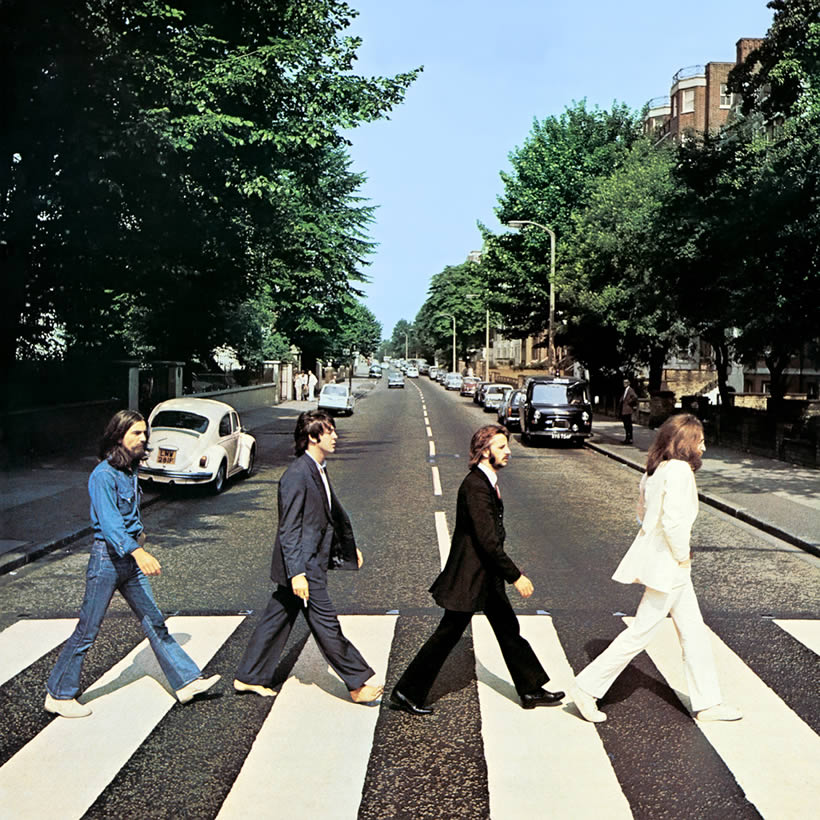
The photographer had ten minutes and a policeman holding up traffic. He took six photographs from a stepladder in the middle of the road. One of them became the most analysed album cover in history.
"It was a very happy period for me. It was as though we were reliving the early days."
- Paul McCartney
01
The origin story
"Here comes the sun, and I say, it's all right"
Here Comes the Sun, track 7
After the disastrous Let It Be sessions in January 1969, where the band nearly broke up on camera, McCartney proposed one more album, recorded properly at Abbey Road with George Martin producing. The band agreed. Sessions ran July to August 1969. It was their last recorded album. Let It Be was released after but recorded before.
Harrison's songwriting was finally given equal space. "Something" and "Here Comes the Sun" are both on this album. Frank Sinatra would later call "Something" "the greatest love song of the past fifty years." It was the first Harrison A-side single. He arrived as a full songwriter on the album that ended the band.
The Moog synthesizer arrived at Abbey Road during sessions. Harrison was fascinated by it. One of the earliest synthesizers used on a pop record, he spent days learning it and deployed it on "Here Comes the Sun," "Because," and throughout the medley on side two.
Jan 1969
Let It Be sessions collapse
Filmed arguments, Harrison temporarily quits. The sessions are later described as the most miserable period in the band's history.
Feb 1969
Allen Klein appointed
Business disputes escalate between McCartney and the others. Klein becomes a fault line that will not heal.
Jul 1, 1969
Abbey Road sessions begin
Back in Studio Two with George Martin. Like the old days. The tension retreats. For a few weeks they are simply a band making a record.
Jul-Aug 1969
The Moog arrives
One of the first synthesizers used on a pop record. Harrison is obsessed. He deploys it on "Here Comes the Sun," "Because," and the entire medley.
Aug 8, 1969
The crosswalk photo
Iain Macmillan. Stepladder. Ten minutes. Six shots. One icon. The four Beatles cross the road in a line. Paul is barefoot.
Aug 20, 1969
Final session
The last time all four Beatles were in a recording studio together. Nobody announced it was the end. They simply never came back.
Sept 26, 1969
Released
Debuted at number one. The band was already secretly dissolving. McCartney would announce his departure the following April.
02
The medley
"Boy, you're gonna carry that weight a long time"
Carry That Weight, track 16
Side two contains a 16-minute medley of eight songs, most of them fragments no individual Beatle could finish alone. Stitched together into a continuous suite. "You Never Give Me Your Money" is McCartney's commentary on Allen Klein and the band's business disputes. The medley was originally sequenced differently and reordered late in production.
"The End" contains the only drum solo Ringo ever played on a Beatles record, followed by the only three-way guitar solo in their catalogue. Lennon, McCartney, and Harrison took turns in pairs of two bars each, cycling through until the section closes. The final lyric on the last Beatles album: "the love you take is equal to the love you make."
The Opening
You Never Give Me Your Money
McCartney's direct statement about Allen Klein and the band's legal and financial situation. It opens the medley with a kind of weary fury, then resolves into something dreamlike.
The Allen Klein song
The Filler
Sun King / Mean Mr. Mustard / Polythene Pam
Three fragment-songs spliced together. Sun King's harmonies are fake Italian and Spanish gibberish. Mean Mr. Mustard came from a newspaper story. Polythene Pam was a real person Lennon knew in Liverpool.
Beautiful nonsense
The Fragments
She Came In / Golden Slumbers / Carry That Weight
Apple Scruffs broke into McCartney's house through his bathroom window. Golden Slumbers uses a lullaby McCartney couldn't read the original sheet music for, so he rewrote the melody. Then the weight.
Unfinished songs, finished
The Finale
The End
Ringo's only drum solo on a Beatles record. Then the three-way guitar battle, Lennon, McCartney, Harrison in rotating pairs of two bars. The last lyric they ever recorded together as a band.
Ringo's only drum solo
03
The cover
"One sweet dream came true today"
You Never Give Me Your Money, track 11
Iain Macmillan. Ten minutes. Six photos from a stepladder while a policeman held up traffic on Abbey Road. The crossing is now a Grade II listed structure. One of those six photographs became the most analysed album cover in the history of recorded music.
Paul is barefoot. He said it was a hot day. He is holding a cigarette in his right hand though he is left-handed. This became conspiracy fuel. The Volkswagen Beetle parked to the left has the plate LMW 28IF. Theorists claimed "28 IF" meant McCartney would have been 28 if he had lived. He was actually 27 at the time of the photograph.
The funeral reading: Lennon in white was the preacher. Starr in black was the undertaker. Harrison in denim was the gravedigger. McCartney barefoot was the corpse. The "Paul is dead" conspiracy theory had been building since 1966. This cover became its central exhibit, particularly after a University of Michigan student laid out the "evidence" on WKNR-FM in October 1969. Within weeks it was national news. McCartney told Life magazine: "I am alive and well and concerned about the rumours of my death. But if I were dead, I would be the last to know."
04
The lore layer
"And in the end, the love you take is equal to the love you make"
The End, track 16
The hidden track
Her Majesty - the first hidden track in rock history
Originally sat between "Mean Mr. Mustard" and "Polythene Pam" in the medley. McCartney didn't like how it sounded there and asked for it to be removed. Second engineer John Kurlander had been told by George Martin never to throw anything away. So he spliced it to the end of the master tape after 20 seconds of silence. The tape box said to leave it off. But mastering engineer Malcolm Davies, also told never to throw anything away, cut a lacquer of the whole sequence including it. The Beatles heard it and liked the surprise. It stayed. The first hidden track in rock history exists because two engineers independently followed the same instruction: never throw anything away.
Conspiracy
Paul is dead - October 1969
The "Paul is dead" theory gained serious traction on October 12, 1969, when University of Michigan student Tom Zarski called into WKNR-FM and laid out the "evidence." Within weeks it was national news. The Beatles never officially responded. This cover became the central exhibit. The barefoot Beatle. The Volkswagen plate. The funeral procession reading. McCartney's response to Life magazine remains the definitive statement on the matter.
Technology
The Moog - Harrison's obsession
George Harrison was fascinated by the Moog synthesizer, one of the earliest used on a pop record. He used it on "Here Comes the Sun" (the shimmering ascending figure in the bridge), "Because" (the otherworldly three-part harmonies), and throughout the medley. The instrument arrived at Abbey Road during the sessions and Harrison spent days learning it before a single note appeared on tape.
The end
August 20, 1969 - nobody said goodbye
The final time all four Beatles were together in a recording studio. They were mixing "I Want You (She's So Heavy)" and working on the crossfades for the medley. Nobody announced it was the end. There was no ceremony, no final toast, no acknowledgment that this was the last time. They simply never came back. The session ran until approximately four in the morning and then it was over.
The finale
The End - pairs of two bars, rotating
After Ringo's drum solo, the three-way guitar battle: McCartney, then Lennon, then Harrison, rotating in pairs of two bars each for three full cycles. Nine bars per guitarist across the whole section. It is the only moment in the Beatles' catalogue where all three guitarists solo simultaneously in sequence on the same track. The last thing they recorded together as a working band was a guitar competition.
05
The songs - what most people miss
"Here comes the sun, and I say, it's all right"
Here Comes the Sun, track 7
Six songs. The details that get lost in the mythology.
01
Come Together
Track 1 - the opener
Written originally for Timothy Leary's California gubernatorial campaign in 1969. The word "shoot me" is whispered at the very start of the track. A lawsuit followed from Chuck Berry's publisher over the resemblance of the opening to "You Can't Catch Me." McCartney settled it years later by recording the song on his Tug of War sessions. The opening bass line is one of the most recognisable in rock history and arrived fully formed.
02
Something
Track 2 - Harrison's masterpiece
Harrison's finest song and the first Beatles A-side single written by him. Sinatra called it "the greatest love song of the past fifty years" and performed it regularly, sometimes crediting it to Lennon and McCartney, which Harrison found quietly maddening. Harrison began writing it during the White Album sessions. It took more than a year to finish. The guitar solo was recorded in one take.
07
Here Comes the Sun
Track 7 - written in Clapton's garden
Harrison wrote it in Eric Clapton's garden on a spring morning in 1969, playing one of Clapton's guitars, skipping an Apple business meeting he had no desire to attend. The song took about 45 minutes to write. It became the most-streamed Beatles song on Spotify decades later, which Harrison could not have imagined. The Moog synthesizer creates the ascending shimmering figure in the bridge.
06
I Want You (She's So Heavy)
Track 6 - 7 minutes 47 seconds
Seven minutes and forty-seven seconds. No fade. No resolution. Just silence, arriving without warning mid-note, a hard tape cut Lennon asked for. The song ends because the tape ends. Lennon instructed the engineers to stop the tape at a specific point while the band and orchestral noise were still building to a peak. Nobody knew exactly when the cut would land. The silence is genuinely jarring every time.
16
The End
Track 16 - the last word
Ringo's only drum solo on a Beatles record, followed by the three-way guitar battle rotating in pairs of two bars. Then the final couplet: "And in the end, the love you take is equal to the love you make." McCartney wrote it as a deliberate final statement. It is the last lyric on the last Beatles album, set to a short orchestral flourish that resolves to silence before Her Majesty appears 20 seconds later.
17
Her Majesty
Track 17 - 23 seconds. The first hidden track
Exists because two engineers were independently told the same thing: never throw anything away. McCartney didn't want it in the medley. Kurlander spliced it to the end of the tape. Davies cut a lacquer of the full sequence. The Beatles heard it and kept it. Twenty-three seconds of McCartney solo acoustic, ending on an unresolved chord because the original edit removed the last note when it was spliced out of the medley.
06
What it's really about
"Boy, you're gonna carry that weight a long time"
Carry That Weight, track 16
Three layers. Most listeners catch one. Here are all three.
Layer one
The last party
The band knew it was ending. The album is a conscious attempt to go out on a high, one final gesture of unity before the dissolution. McCartney proposed it precisely because he understood the Let It Be sessions had nearly destroyed them. Abbey Road is a farewell that refuses to look like one.
Layer two
Harrison's arrival
After years of being limited to two songs per album, Harrison delivered "Something" and "Here Comes the Sun" on the same record. Sinatra called the first the greatest love song of the past fifty years. The second became the most-streamed Beatles song decades later. He arrived as a songwriter on the album that ended the band.
Layer three
The medley as metaphor
Fragments that couldn't exist alone, assembled into a whole greater than its parts. No individual Beatle could finish these songs on their own. Together they become a 16-minute suite. The band itself, in the last months of its existence, was exactly this: fragments holding together through sheer collective will.
07
The tracklist
Seventeen tracks, including one hidden. The full sequence, with the detail buried in each one.
Amber = highlighted trackIndigo = lore track
#
Title
What you might not know
1
Come Together
"Shoot me" whispered at the start. Originally written for Timothy Leary's gubernatorial campaign. A Chuck Berry lawsuit followed.
2
Something
Harrison. Sinatra: "the greatest love song of the past fifty years." The first Harrison A-side single. He began it during the White Album sessions.
3
Maxwell's Silver Hammer
McCartney perfectionism. The rest of the band hated recording it. Multiple full-band takes over multiple sessions.
4
Oh! Darling
McCartney came in early every morning to sing it before his voice warmed up, wanting the rawness of an unprepared take.
5
Octopus's Garden
Starr's second and final Beatles composition. Written on Peter Sellers' yacht after learning that octopuses collect objects to make gardens.
6
I Want You (She's So Heavy)
7 minutes 47 seconds. Ends mid-note with a hard tape cut. No fade. No resolution. Lennon told the engineers exactly where to stop the tape.
7
Here Comes the Sun
Written in Eric Clapton's garden, skipping an Apple business meeting. Now the most-streamed Beatles song. The Moog creates the bridge shimmer.
8
Because
Three-part harmony inspired by Yoko playing Beethoven's "Moonlight Sonata." Lennon asked her to play the chords backwards.
9
You Never Give Me Your Money
McCartney on Allen Klein and the business crisis. Opens the medley. "You never give me your money, you only give me your funny paper."
10
Sun King
The harmonies are fake Italian and Spanish gibberish. Sounds beautiful. Means nothing. Lennon said he wanted it to sound like "como esta usted."
11
Mean Mr. Mustard
From a newspaper story about a miser who hid money in his beard. Lennon wrote it in India in 1968 and it waited a year and a half to be recorded.
12
Polythene Pam
A real person Lennon knew in Liverpool who ate polythene. Also written in India. The scream at the start was recorded in a single take.
13
She Came In Through the Bathroom Window
Written about Apple Scruffs, the dedicated fans who literally broke into McCartney's house through his bathroom window to look through his belongings.
14
Golden Slumbers
McCartney couldn't read the sheet music for the original Thomas Dekker lullaby. He kept the words and wrote an entirely new melody on the spot.
15
Carry That Weight
"Boy, you're gonna carry that weight a long time." About the band's business problems, sung by all four Beatles. The last time all four sang together on a recording.
16
The End
Ringo's only drum solo. The three-way guitar battle in rotating pairs of two bars. "The love you take is equal to the love you make." The last lyric on the last Beatles album.
17
Her Majesty
23 seconds. The first hidden track. Exists because two engineers were told never to throw anything away and both independently followed the instruction.
Sources
The Beatles: Get Back (dir. Peter Jackson, 2021). Beatles Bible session logs. Recording the Beatles by Kevin Ryan and Brian Kehew. Iain Macmillan estate. Ken Scott interview, Sound on Sound.
IF YOU LIKED THIS
Read these next
Albums about bands falling apart while making their best work, and the art of the farewell.