Album deep read

Fleetwood Mac Rumours Warner Bros.

1977  ·  Warner Bros.  ·  11th Studio Album
11 Tracks 2 Broken Couples 5 Songwriters 40 Million Copies

Two couples in the same band were breaking up at the same time. They wrote songs about each other, then stood at the same microphone and sang them. The result sold 40 million copies.
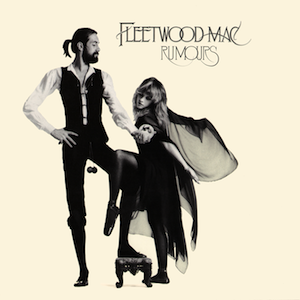
Fleetwood Mac Rumours album cover
"Stevie was writing dialogues to me, I was writing dialogues to her."
- Lindsey Buckingham
01
The origin story
"Thunder only happens when it's raining"
Dreams, track 3

In 1976, everything in Fleetwood Mac fell apart simultaneously. Lindsey Buckingham and Stevie Nicks ended their eight-year relationship. John and Christine McVie divorced after eight years of marriage. Mick Fleetwood discovered his wife Jenny Boyd was having an affair with his best friend. Three relationships collapsed inside one band. They went into the studio anyway.

Recording took place at Record Plant in Sausalito, California, from February to August 1976, with additional sessions at other studios. Producer-engineers Ken Caillat and Richard Dashut worked alongside the band. The sessions were fuelled by cocaine, alcohol, and the unique toxicity of five people who were contractually obligated to be in a room together while their personal lives burned.

The budget ballooned. Cocaine expenses allegedly rivalled studio costs. Band members would record their parts separately and leave before the person they were writing about arrived. Sometimes they did not leave in time.

1975
Buckingham and Nicks join
The couple are recruited from their duo. The classic lineup forms.
Early 1976
The breakups
Buckingham and Nicks split. The McVies divorce. Fleetwood's marriage collapses. All within months of each other.
Feb 1976
Recording begins
Record Plant, Sausalito. Five people who can barely look at each other start making an album together.
Mid 1976
The sessions
Songs written as dialogues. "Go Your Own Way" enrages Nicks. "Dreams" is her response. The band records in shifts to avoid confrontations.
Late 1976
"Silver Springs" cut
Nicks' most personal song is removed from the album. Too long for the vinyl. Becomes a B-side. A wound that takes twenty years to close.
Feb 4, 1977
Released
Debuted at number one. 40 million copies sold. One of the best-selling albums in history. The private pain is now everybody's music.
02
The songs as dialogue
"Packing up, shacking up is all you wanna do"
Go Your Own Way, track 5

The album is a conversation between people who can no longer speak to each other except through music. Every song is aimed at someone in the room.

Buckingham to Nicks
Go Your Own Way
Track 5
"Packing up, shacking up is all you wanna do." Nicks was furious. She felt the line accused her of infidelity. Buckingham: "It was about us, obviously." He played the drums himself on the recording because the anger needed to be his.
Nicks to Buckingham
Dreams
Track 3
Written alone in a room at the Record Plant. While Buckingham's goodbye was anger, Nicks' was introspection. "Players only love you when they're playing." The band's only Billboard number one.
Christine McVie
You Make Loving Fun
Track 8
Written about Curry Grant, the band's lighting director, with whom Christine was having an affair. She told John McVie, her ex-husband and bassist, that it was about her dog.
All five members
The Chain
Track 7
The only song credited to all five members. Assembled from fragments of different rejected songs. The bass line played by the man Christine was divorcing and the harmonies sung by the couple that had just split create something none of them could have made alone.
03
The lore layer
"Time casts a spell on you, but you won't forget me"
Silver Springs, the ghost track
The ghost track
Silver Springs — twenty years as a wound
Nicks' most personal song was cut from the album, replaced by "I Don't Want to Know" because "Silver Springs" was too long for the vinyl. Nicks was devastated. The song was about Buckingham: "Time casts a spell on you, but you won't forget me." It was relegated to a B-side.
The wound festered for twenty years. In 1997, during The Dance reunion concert, Nicks performed "Silver Springs" live, staring directly at Buckingham during the final verse. The footage is one of the most intense moments in live music history. Buckingham's face, caught on camera as she holds the note and does not look away, tells everything the song could not say.
The sessions
The cocaine
The band's drug consumption during the Rumours sessions is not rumour. Ken Caillat, the co-producer, has described sessions where band members would disappear for hours, return wired, and either produce brilliant work or destroy what they had done. Christine McVie: "We'd have these amazing highs and then these crashing lows." The cocaine did not make the album. But it is inseparable from the album's texture, the manic energy that swings between euphoria and despair within the same song.
One take
Songbird at 3am
Christine McVie's "Songbird" was recorded in a single take at 3am in an empty auditorium, the Zellerbach Auditorium at UC Berkeley. The band booked it specifically for this song. McVie sat alone at a grand piano in a hall that seats 2,000 people. One microphone. One take. The echo you hear is the room.
The cover story
The dog lie
When John McVie asked Christine what "You Make Loving Fun" was about, she told him it was about her dog. It was about Curry Grant, the lighting director she was seeing. John played bass on the track. He did not know he was providing the rhythm for a song celebrating the man his ex-wife had replaced him with.
04
The songs
"Players only love you when they're playing"
Dreams, track 2

Six songs. Not the radio versions. What is underneath.

01
Dreams
Track 2 · Stevie Nicks
Written alone in a room at the Record Plant while the rest of the band was somewhere she could not be. The only Fleetwood Mac song to reach number one on the Billboard Hot 100. The gentleness is intentional. Where Buckingham answered with anger, Nicks answered with calm. "When the rain washes you clean, you'll know." It is the most devastating kind of farewell: the one that wishes you well.
02
Go Your Own Way
Track 5 · Lindsey Buckingham
Buckingham wrote and arranged this himself, playing the drums on the recording because he felt the anger needed to come from him personally. Nicks has said she was hurt by the "packing up, shacking up" lyric for years, feeling it misrepresented her. They sang it together at every concert for forty years. The audience heard a rock anthem. The two of them knew what it really was.
03
The Chain
Track 7 · All five members
The only Rumours track credited to all five members, assembled from pieces of songs that were not working individually. The driving bass section was played by John McVie, who was in the process of divorcing the woman who recorded her vocal directly before or after him in the same studio. The chain that would not break: not a metaphor. A fact about what they were contractually, professionally, and personally locked into together.
04
Songbird
Track 6 · Christine McVie
Recorded at 3am in the Zellerbach Auditorium at UC Berkeley. 2,000 empty seats. McVie alone at a grand piano with one microphone. One take. The song is about unconditional love, written by a woman in the middle of a divorce. The echo in the room is the building itself. No reverb was added. What you hear is a woman in a very large, very empty space, singing to no one, about something she still believed in.
05
Gold Dust Woman
Track 11 · Stevie Nicks
The album's darkest moment. Nicks wrote it about cocaine, about the music industry, about surviving both. "Rock on, gold dust woman. Take your silver spoon, dig your grave." She was writing about the people around her and, to some extent, about herself. It is the only song on the album that does not address a specific person. It addresses a condition. The last track on the album. The sun going down on everything Rumours was made inside of.
06
Silver Springs
Ghost track · Stevie Nicks
Cut from the album for length. Released as the B-side to "Go Your Own Way," which meant that Nicks' response to Buckingham's attack was literally on the back of that attack, commercially invisible. The song Nicks wrote about Buckingham was distributed in service of the song Buckingham wrote about her. She did not know this was how it would be packaged. It took twenty years and a reunion concert for the song to find its audience.
05
What it's really about
"Thunder only happens when it's raining"
Dreams, track 3

Rumours operates on three thematic levels simultaneously. Most listeners catch one.

Layer one
Using art to survive
Five people turned their worst year into their best work. The album is proof that creativity and destruction can happen simultaneously, that the same energy that breaks a relationship can, under the right conditions, make something that outlasts everything that caused it. The songs are not the residue of the pain. They are what the pain was converted into.
Layer two
The song as weapon and offering
Every track is both an attack and an attempt to understand. Buckingham attacks Nicks in "Go Your Own Way" but the melody is beautiful. Nicks responds with "Dreams" and the tone is compassion rather than revenge. The songs are not just about the breakups. They are the breakups, extended and made permanent, given a form that survives the relationship that generated them.
Layer three
The audience as voyeur
40 million people bought this album. They were listening to private pain packaged as pop music. The album's genius is making heartbreak sound like something you would play at a party. The vocals are polished, the production is meticulous, the arrangements are warm. None of that is accidental. The craft is the container that made the rawness bearable enough to sell.
06
The tracklist

Eleven tracks. The full sequence, as it was intended to be heard.

Gold = highlighted track
#
Title
The story inside the song
1
Second Hand News
Buckingham. About Nicks. The opening line: "I know there's nothing to say"
2
Dreams
Nicks. The only number one single. Written alone in a room at the Record Plant.
3
Never Going Back Again
Buckingham. Acoustic fingerpicking. Deceptively peaceful for a song about a relationship ending.
4
Don't Stop
Christine McVie. The optimism in the wreckage. Later used as Bill Clinton's 1992 campaign song.
5
Go Your Own Way
Buckingham to Nicks. "Packing up, shacking up." She never forgave the line.
6
Songbird
Christine McVie. One take. 3am. Empty 2,000-seat auditorium. Grand piano. One microphone.
7
The Chain
All five members. The only song they all wrote together. Assembled from fragments. John McVie's finest bass moment.
8
You Make Loving Fun
Christine McVie. About the lighting director. She told her ex-husband it was about her dog.
9
I Don't Want to Know
Nicks. Replaced "Silver Springs" on the album. The replacement that opened a 20-year wound.
10
Oh Daddy
Christine McVie. About Mick Fleetwood, whom she called "daddy".
11
Gold Dust Woman
Nicks. About cocaine. About the music industry. About surviving both. The album's darkest moment.
Sources
Making Rumours by Ken Caillat and Steve Stiefel (2012). Classic Albums: Rumours (Eagle Rock, 1997). Stevie Nicks, Rolling Stone interviews (various). Mick Fleetwood, Play On (2014).
IF YOU LIKED THIS

Read these next

Albums about relationships collapsing inside the room where the music is being made.