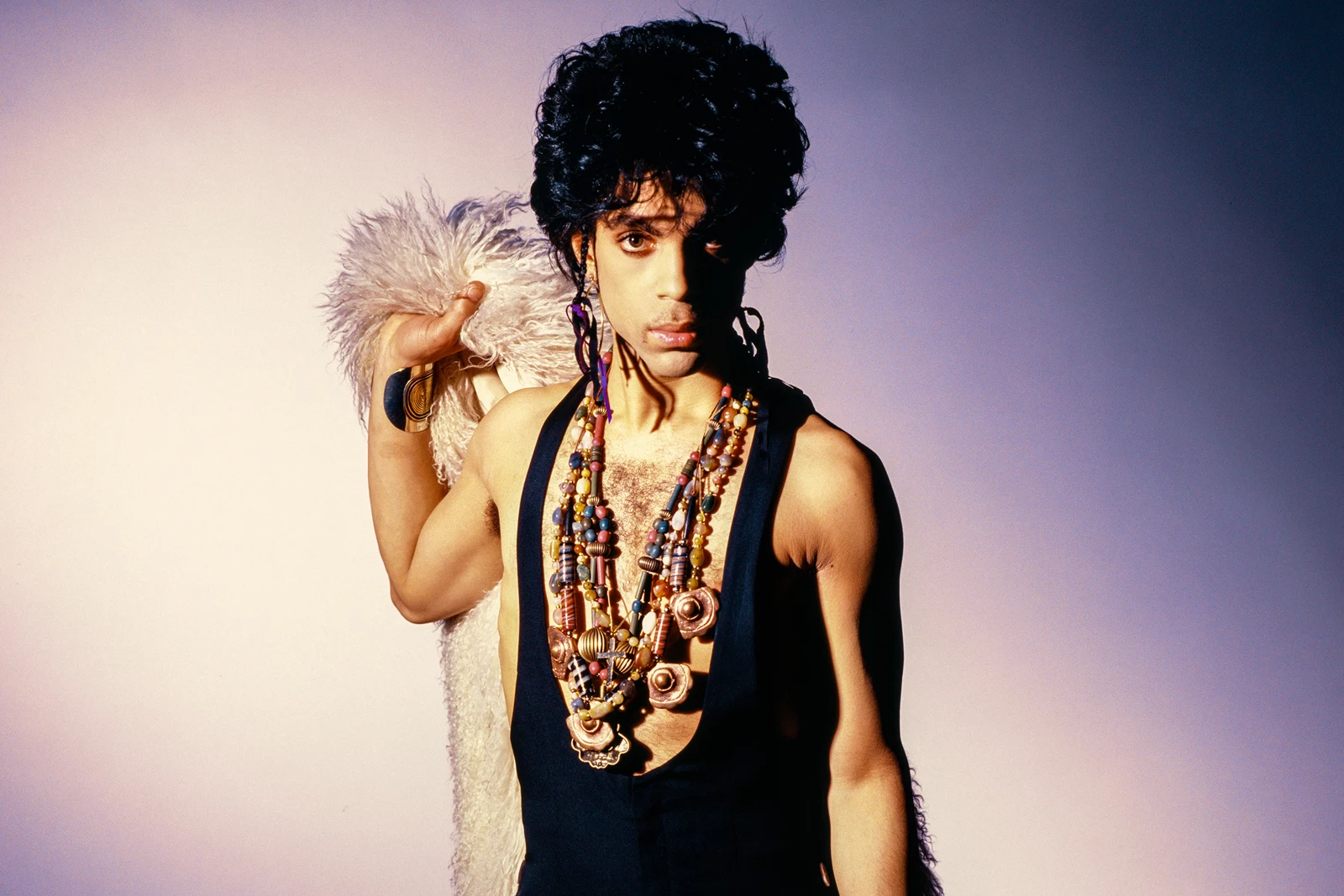
1987 · Paisley Park / Warner Bros. · 9th Studio Album
16 Tracks3 Abandoned Albums1 Female Alter Ego1 Vault of Thousands
This album contains the remains of three other albums that never existed. Warner Bros. forced Prince to cut a triple album down to a double. What survived is widely considered his masterpiece. What didn't survive fills a vault that may never be fully opened.
"I have thousands of songs in the vault, and I want them all to come out."
-- Prince
01
The origin story
"In France a skinny man died of a big disease with a little name"
Sign o' the Times, track 1
By the end of 1986, Prince had just done something that should have been impossible. He had dissolved The Revolution, the band he had built and toured and recorded with for nearly a decade, and announced he would go forward alone. Parade, released earlier that year, had been a commercial disappointment by his standards. The film it soundtracked, Under the Cherry Moon, was a critical failure. Prince, who had been the most commercially dominant solo artist in pop music for three straight years, was suddenly in the unfamiliar position of having to rebuild.
His response was not to regroup. It was to accelerate. In the months following the breakup of The Revolution, Prince entered what his engineers later described as a creative frenzy. He worked around the clock at Paisley Park, the studio complex he had built in Chanhassen, Minnesota. He was writing and recording faster than anyone around him could keep up with. Three separate album projects took shape almost simultaneously. Not sketches or demos. Complete, sequenced records.
The first was called Dream Factory. It was a double album that included recordings with members of The Revolution, even as that band was being dismantled. It had collaborations, vocal features, a sense of community. The second was called Camille. It was something stranger: an album recorded entirely in Prince's own voice, but played back at increased speed, creating a female alter ego who would release the record without his name or his photograph on the cover. The music would stand on its own, without celebrity. The third was Crystal Ball, which combined and expanded both projects into a triple album of twenty-two songs.
Warner Bros. refused to release a triple album. They had watched Parade underperform. They were not interested in commercial risk. They told Prince to cut it to a double. He cut seven tracks. What remained became Sign o' the Times.
1986
Parade released, Under the Cherry Moon fails
The film is a box-office disappointment. Prince, who directed it, receives a Razzie for Worst Director. The critical and commercial failure prompts a reassessment. He dissolves The Revolution shortly after.
Late 1986
Dream Factory begins
Recording sessions at Paisley Park. Still collaborative, featuring Revolution members even as that chapter is ending. A double album takes shape, warm and band-oriented in feel.
Late 1986
The Camille project
Prince begins recording a parallel solo album entirely in his own voice, then speeds up the tape to create a female alter ego. The plan is an anonymous release under the name Camille, no photograph, no Prince credit. An experiment in music without fame.
Late 1986 - Early 1987
Crystal Ball assembled
Prince combines Dream Factory and Camille material with new recordings into a triple album of twenty-two tracks. He submits it to Warner Bros. as a finished, sequenced record. They say no.
Early 1987
Warner Bros. demands a double
The label refuses to release a triple album from an artist whose last project underperformed commercially. Prince is forced to cut seven tracks. Three albums collapse into one double album.
March 1987
Sign o' the Times released
The resulting double album receives unanimous critical acclaim. It enters the Billboard 200 at number 6. It is later cited by critics, musicians, and Rolling Stone as one of the greatest albums ever made.
02
The three ghosts
Every track on this album is a survivor. Three records were destroyed to make it.
Dream Factory, Camille, Crystal Ball
Sign o' the Times carries the DNA of three albums. Understanding what those albums were is the only way to understand what the final record actually is.
Ghost One
Dream Factory
The collaborative record. Dream Factory was a double album built with the final incarnation of The Revolution, featuring Wendy Melvoin, Lisa Coleman, and other regular collaborators. It had a warmth and an ensemble quality that Prince's solo work rarely matched. Tracks like "Starfish and Coffee" and the original sequence of "Strange Relationship" existed here first. The communal spirit of Dream Factory survives in the more band-oriented moments on Sign o' the Times, even though The Revolution was already gone by the time those tracks arrived on the record.
Collaborative
Ghost Two
Camille
The anonymous record. Camille was Prince singing in his natural voice, with the recording tape then played back at increased speed to raise the pitch into a female register. This was not a falsetto. It was a mechanical transformation. The resulting voice belonged to a character he called Camille, who was to release the album without Prince's name, without his photograph, without any connection to his existing celebrity. The Camille voice appears on the final album in "If I Was Your Girlfriend" and "Housequake." Two tracks from a complete project that Warner Bros. never released.
Anonymous
Ghost Three
Crystal Ball
The maximalist vision. Crystal Ball was the final form: a triple album of twenty-two tracks that incorporated Dream Factory and Camille material alongside new recordings. It was Prince's attempt to release everything at once, to put the full scope of what he had made into the world. Warner Bros. said no. Seven tracks were removed. What survived the cut became Sign o' the Times. The seven that didn't survive eventually appeared on a 1998 box set Prince released under the Crystal Ball name, after winning his independence from the label.
Maximalist
03
The Camille voice
"Could you be the most beautiful girl in the world? It's plain to see you're the reason that God made a girl"
If I Was Your Girlfriend, track 10
The Camille voice is one of the most misunderstood elements of Sign o' the Times. It is commonly described as a falsetto. It is not a falsetto. Prince sang the affected tracks in his normal speaking register, recording the performances straight to tape. The tape was then played back at a slightly higher speed than it was recorded. The result is Prince's voice at its natural timbre and weight, transposed upward by the mechanical act of increasing the playback rate. Every quality of his actual voice is preserved, just shifted into a female range.
The original Camille project was an attempt to remove Prince from his own music. He wanted to release an album under the Camille name with no photograph of himself on the cover and no confirmation anywhere that the artist was him. The question he was asking was direct: would the music work without the celebrity attached to it? Could an audience hear a voice they had never encountered and respond to it purely as music?
Warner Bros. cancelled the Camille release before it reached the public. Two tracks from the project survived onto Sign o' the Times: "If I Was Your Girlfriend" and "Housequake." Both appear in the Camille voice. Both are among the most formally unusual pieces on the album. "If I Was Your Girlfriend" is written from the perspective of a person who wants the emotional intimacy of a female friendship rather than the distance of a romantic relationship. The Camille voice makes the question literal. Who is singing? The ambiguity is not incidental. It is the point.
The mechanics
Tape speed as identity tool
Prince recorded the Camille vocals at standard speed, then had the tape played back at a slightly elevated rate during mixing. The technique was not new. It had been used in pop production since at least the 1950s. What was new was using it not as a novelty effect but as a sustained identity project across an entire album. The Camille voice is not processed in the conventional sense. It is Prince, but faster than he was recorded.
The cancelled release
No name. No face. No Prince.
The original Camille album was fully sequenced and prepared for release. Sheena Easton was credited as a collaborator on at least one track. The album cover had been designed without Prince's image. Warner Bros. pulled it, folding the project into what eventually became Sign o' the Times and later Crystal Ball. A complete anonymous album exists in the vault and has never been released in its original sequence and concept.
04
The vault
"I have thousands of songs in the vault, and I want them all to come out."
Prince
The legend
The Paisley Park vault - what is actually in there
Beneath the Paisley Park complex in Chanhassen, Minnesota, there is a climate-controlled archive. Prince began filling it in the early 1980s and continued until his death in 2016. The contents are estimated in the thousands of recordings. Not sketches and demos, though those exist too, but complete, produced, mastered tracks that Prince simply chose not to release. Some were withdrawn from release at the last moment. Some were held back because he was unhappy with the label deal he would have had to release them under. Some were held because he preferred to keep them.
In 2020, the estate released a Super Deluxe edition of Sign o' the Times that included sixty-three previously unreleased recordings, including large portions of the Dream Factory, Camille, and Crystal Ball material. It was the most significant opening of the vault since Prince's death. The vault is still not empty. Nobody outside the estate has a credible count of what remains.
The 2020 reissue
63 unreleased tracks - the Dream Factory sessions surface
The Sign o' the Times Super Deluxe edition released in October 2020 contained eight discs of material. Alongside the remastered original album, it included the near-complete Camille sequence, a significant portion of Dream Factory, and the full Crystal Ball track listing as it had been submitted to Warner Bros. in 1987. For the first time, listeners could hear what the three ghost albums had actually sounded like. The sequencing of Dream Factory alone rewrote the critical understanding of what Prince had been attempting in that period.
The 1998 Crystal Ball box
Prince releases the vault himself
After winning his independence from Warner Bros. in the mid-1990s following the infamous symbol name change and "slave" face paint campaign, Prince released a four-disc box set in 1998 under the Crystal Ball name. It included many of the tracks cut from the 1987 triple album submission, sold directly to fans via his website before CD stores received copies. It was one of the first major direct-to-consumer album releases in the internet era. Prince used his vault to make a point about ownership.
After 2016
The vault without its keeper - what happens now
Prince died on April 21, 2016, without a will. The legal battle over his estate took years to resolve. During that time, the vault sat largely sealed while courts determined who controlled it. The estate, eventually managed by Primary Wave Music, has been cautious about releases, prioritising reissues and archival editions of existing albums. What remains unreleased, how many complete albums, how many finished singles, how many collaboration sessions, is genuinely unknown to the public. Prince spent decades ensuring it stayed that way.
05
The songs - what most people miss
"Honey, I know, I know, I know times are changing"
Sign o' the Times, track 1
Six tracks. The readings underneath the surface.
01
Sign o' the Times
Track 1, Disc 1
The opening is a list of disasters. AIDS named without naming it, as a "big disease with a little name." Gang violence. The Challenger explosion. A hurricane in Miami. A gang in LA with a hundred men. Prince delivers each item in the same flat, reportorial tone, over a drum machine groove that is almost cheerful in its precision. The mismatch is the point. The world is ending. The beat continues. Most readings focus on Prince as social commentator, which he was, briefly and unusually. What gets missed is the formal decision: to set catastrophe to a groove you can dance to. The song is not asking you to stop. It is noting that you won't.
02
If I Was Your Girlfriend
Track 10, Disc 1 · Camille voice
The Camille voice makes this song's conceit precise and strange. The narrator wants the intimacy that comes with female friendship rather than the performance that comes with romantic partnership. "If I was your girlfriend, would you let me dress you?" The question is about access, about the emotional closeness that social roles deny to heterosexual men with women they love. The Camille voice does not resolve that tension. It deepens it. Who is asking the question? The mechanical pitch shift removes certainty. The song was a top-ten R&B hit. Most people who danced to it did not stop to locate who was singing.
03
The Cross
Track 16, Disc 2
The album closes with a gospel rock track that is formally closer to U2 than to anything else Prince had made. It is direct where the album's other political tracks are oblique. After all the crisis of the opening track, after AIDS and gangs and hurricanes, the album's answer is spiritual and unapologetic. Prince was a Jehovah's Witness by this point, though he would not publicly announce his conversion until several years later. The Cross does not require that context to work, but it rewards it. The album that began by naming the world's disasters ends by proposing an exit from them. Whether that proposition is comforting or evasive is left entirely to the listener.
04
I Could Never Take the Place of Your Man
Track 13, Disc 2
Originally recorded in 1979, eight years before this album was released. Prince kept it in the vault for nearly a decade, waiting. The song is built around a guitar riff that never resolves. A woman approaches a man in a bar. He is attracted to her. He turns her down. Not because he doesn't want her, but because he can see she is in pain and he cannot be what she actually needs. It is one of the most emotionally precise rejections in pop music. The extended coda, which runs for roughly three minutes of escalating guitar, turns a verse-chorus pop song into something closer to a meditation. Prince recorded the coda in a single take.
05
Housequake
Track 6, Disc 1 · Camille voice
The second Camille track on the album. Where "If I Was Your Girlfriend" is introspective and formal, "Housequake" is a party record, specifically a party record recorded by a person who cannot stop performing even in leisure. The command to shut up and dance is delivered with the Camille voice at its most manic. The Minneapolis funk of this track is as close as the album gets to the sound Prince had been making before Parade. Its presence confirms what the album was always partly doing: carrying the remnants of an era that had just ended.
06
Adore
Track 16, Disc 2 (final track before The Cross)
An eight-minute slow jam that is, technically, a demonstration of everything Prince could do with the human voice. He recorded it almost entirely alone. It proceeds through harmonic changes that most pop producers would not attempt across an entire album, here deployed in a single song. It is often cited as among the purest expressions of what he was as a vocalist. It ends without resolution. Then The Cross begins, and the album closes. Adore is an act of pure craft arriving just before an act of faith. The sequencing is not accidental.
06
What it's really about
Three layers. Most listeners catch one.
The political moment, identity as performance, and the album as survivor
Sign o' the Times operates on three thematic registers simultaneously. They do not conflict. They reinforce each other.
Layer one
The political moment
The title track is the most explicitly political thing Prince ever recorded. AIDS. Crack cocaine. Gang violence. The Challenger shuttle. Natural disasters. He lists them without editorialising, which makes the effect more destabilising than protest would have. The rest of the album is not political in the same direct way, but the context of 1987 America runs underneath everything. An artist working at the height of the Reagan era, naming the failures that that era preferred not to name, set to a groove that compelled dancing. The dance was not denial. It was the only form of response available.
Layer two
Identity as performance
Prince, Camille, The Revolution, the solo artist. Who is actually singing? The album contains tracks from at least three separate artistic identities. The Camille voice is the most obvious case, but the question runs through everything. Dream Factory was collaborative. Camille was anonymous. Crystal Ball was maximalist and Prince-branded. Sign o' the Times carries residue from all three, which means no single authorial voice runs through it consistently. It is a record about the instability of identity made by a person who was, at the time, actively multiplying his own identities to see which ones could survive without his name attached.
Layer three
The album as survivor
What you hear on Sign o' the Times is what was left after three albums were destroyed to make one. Every track is a survivor. The sequencing carries the logic of salvage, not of original design. The album does not have the conceptual unity of a work built from scratch as a double album. It has something stranger: the coherence that emerges from what endures after reduction. Warner Bros. forced Prince to cut it, and in doing so they created the conditions for the record's particular, unplannable greatness. The masterpiece is an accident. That is also, in a different sense, what the title track is about.
07
The tracklist
Sixteen tracks across two discs. Every one a survivor from a triple album that was never released.
Purple = Camille voice trackPink = originally from Dream FactoryGold = vault recording, held years before release
#
Title
What you might not know
Disc One
1
Sign o' the Times
Originally from the Dream Factory sessions. The most politically direct lyric Prince ever published, naming AIDS, crack, and Challenger in the opening verse.
2
Play in the Sunshine
Recorded as Prince was beginning to explore life as a solo artist after The Revolution. A deliberate contrast to the darkness of track one.
3
Housequake
Camille voice. A Minneapolis funk track that arrives like a counterweight to the opening ballads. Prince performs it at maximum energy, in someone else's voice.
4
The Ballad of Dorothy Parker
Deliberately recorded with an intentionally lo-fi sound. Prince wanted it to feel like it was being listened to through a wall from another room.
5
It
One of the most explicit tracks Prince released on a mainstream album. The title functions as a deliberately vague euphemism for something that is not vague at all.
6
Starfish and Coffee
Originally from Dream Factory. A song about a school child who brings unusual food to class. Completely anomalous in the context of the surrounding tracks. That is the point.
7
Slow Love
Co-written with Carole Davis. One of the more conventional ballads on the record, which makes it both a respite and slightly out of place.
8
Hot Thing
A funk track that, like much of the album, was recorded almost entirely by Prince alone at Paisley Park. No band. One person, all the instruments.
9
Forever in My Life
Vault recording. A devotional track that foreshadows Prince's public announcement of his conversion to the Jehovah's Witnesses, which would come years later.
Disc Two
10
If I Was Your Girlfriend
Camille voice. The defining track of the Camille project, asking what emotional access would look like if the gender of the relationship were different. A top-ten R&B hit.
11
Strange Relationship
Originally from Dream Factory. A song about the self-destructive dynamic of a relationship both parties refuse to leave. Prince revised it multiple times across the three ghost projects.
12
I Could Never Take the Place of Your Man
Recorded in 1979, held for eight years. The extended coda was performed in a single take. Prince kept it in the vault until this album gave it somewhere to belong.
13
The Cross
A gospel rock track that closes the album with a direct spiritual statement. Prince was already a Jehovah's Witness when he recorded it, though he would not say so publicly for years.
14
It's Gonna Be a Beautiful Night
Recorded live in Paris with an assembled band. One of only two non-Paisley Park recordings on the album. The energy is audibly different from every other track.
15
Adore
Eight minutes. Recorded almost entirely alone. Harmonic changes across the song that most producers would not attempt across a full album. Considered by many critics his greatest vocal performance.
Sources
Ultimate Prince: Sign O' the Times Box Set retrospective. Official Charts: The Inside Story on Sign O' the Times (2020). Classic Pop: Making Prince (2019). Camille album documentation, Prince Vault. Sign O' the Times Super Deluxe Edition liner notes (2020). Mojo Magazine retrospective.
IF YOU LIKED THIS
Read these next
Albums about alter egos, creative excess forced into shape, and vaults full of music the world may never hear.